
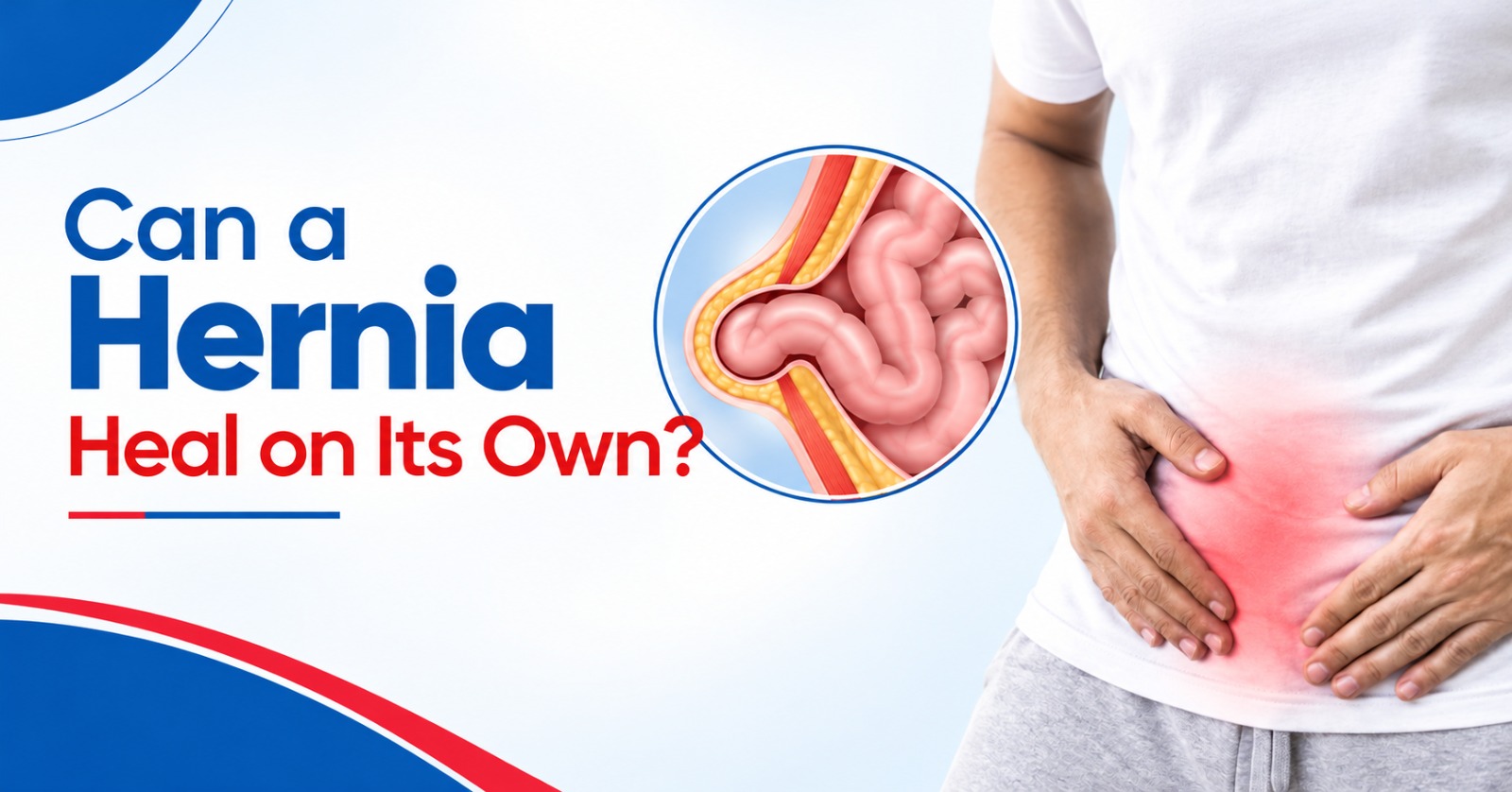
A hernia can appear as a small lump or bulge that may become more noticeable when you cough, strain, lift something heavy, or stand for a long time. While some hernias may cause little or no discomfort initially, many people wonder: Can a hernia heal on its own?
The short answer is usually no. A hernia generally does not repair itself because it involves a weakness or opening in the muscle or tissue through which an organ or tissue pushes. However, not every hernia requires immediate surgery. Depending on the type, size, symptoms, and overall health of the individual, a doctor may recommend observation, lifestyle measures, or surgical treatment.
Understanding your hernia treatment options can help you make an informed decision and avoid complications.
What Is a Hernia?
A hernia occurs when an internal organ or tissue pushes through a weak area in the surrounding muscle or connective tissue. It commonly develops in the abdominal wall or groin.
Some common types of hernia include:
• Inguinal hernia: Occurs in the groin and is one of the most common types.
• Femoral hernia: Develops in the upper thigh or outer groin area.
• Umbilical hernia: Occurs around the belly button.
• Incisional hernia: Develops through a previous surgical incision.
• Hiatal hernia: Occurs when part of the stomach moves through the diaphragm into the chest.
The symptoms can vary depending on the type and severity of the hernia.
Can a Hernia Heal Naturally?
In most adults, a hernia does not heal on its own.
Unlike a minor muscle injury, a hernia involves a structural weakness or defect in the tissue. Rest or avoiding strenuous activities may reduce discomfort, but these measures generally do not close the underlying opening.
A small hernia that is not causing symptoms may sometimes be monitored by a doctor. This approach is commonly known as watchful waiting. However, regular medical evaluation is important because a hernia can change over time.
Can Exercise Fix a Hernia?
Exercise cannot close the opening or weakness responsible for most adult abdominal wall hernias.
Certain exercises may increase pressure inside the abdomen and could make symptoms more noticeable. Heavy lifting and exercises that cause significant straining should be discussed with a healthcare professional if you have a known hernia.
That does not mean you need to stop all physical activity. Your doctor can help determine which activities are appropriate for you.
Can a Hernia Get Smaller Without Surgery?
A hernia may sometimes appear smaller when you lie down or relax because the protruding tissue moves back into place. This does not necessarily mean the hernia has healed.
Some hernias can be temporarily pushed back into the abdomen, a condition known as a reducible hernia. Even if the bulge disappears, the underlying weakness can remain.
This is why disappearing symptoms should not automatically be considered a sign that the hernia is cured .
What Happens If a Hernia Is Left Untreated?
Some hernias remain stable for a period of time, particularly when they are small and cause minimal symptoms. However, a hernia can also become larger or more uncomfortable over time. Potential problems can include:
• Increasing pain or discomfort
• Enlargement of the bulge
• Difficulty with daily activities
• The hernia becoming difficult or impossible to push back
• Incarceration, when the herniated tissue becomes trapped
• Strangulation, when the blood supply to the trapped tissue is reduced or cut off
Strangulated hernias can be a medical emergency and require urgent treatment.
When Should You See a Doctor for a Hernia?
You should consider medical evaluation if you notice:
• A new lump or bulge in the abdomen or groin
• Pain or discomfort around the bulge
• A bulge that becomes more prominent when coughing or lifting
• A hernia that is increasing in size
• Difficulty pushing a previously reducible hernia back in
• Persistent abdominal or groin discomfort
Early evaluation can help determine the type of hernia and the most appropriate treatment approach.
Hernia Treatment Options
1. Watchful Waiting
For certain hernias that are small and cause few or no symptoms, a doctor may recommend monitoring
rather than immediate surgery. During watchful waiting, you may be advised to:
• Monitor changes in the bulge
• Report increasing pain or discomfort
• Avoid activities that significantly worsen symptoms
• Attend follow-up appointments when recommended
2. Lifestyle and Activity Changes
Lifestyle measures may help manage symptoms but generally do not repair the underlying hernia.
Depending on your condition, your healthcare provider may recommend:
• Avoiding excessive straining
• Using proper lifting techniques
• Managing constipation
• Maintaining a healthy weight
• Treating a persistent cough
• Adjusting activities that trigger pain
Watchful waiting is not the same as curing the hernia. It is a medical management strategy based on the
individual’s circumstances.
3. Hernia Surgery
Surgery is the definitive treatment for many symptomatic abdominal wall and groin hernias. The purpose of hernia surgery is to return the protruding tissue to its proper position and repair or reinforce the weakened area.
Open Hernia Repair
In open surgery, the surgeon makes an incision over the affected area, returns the herniated tissue to its proper position, and repairs the weakened abdominal wall. A surgical mesh may be used in appropriate cases to reinforce the repair.
Laparoscopic Hernia Repair
Laparoscopic surgery uses small incisions and a camera to allow the surgeon to view and repair the hernia. It may be appropriate for certain patients and types of hernia.
Robotic Hernia Repair
Robotic-assisted surgery uses specialized instruments controlled by the surgeon. It may be considered for selected patients depending on the type and complexity of the hernia. The best surgical approach depends on the individual patient and should be decided after evaluation by a qualified surgeon.
Can a Hernia Be Prevented?
Not every hernia can be prevented because some are related to factors such as natural weaknesses in the abdominal wall or previous surgery. However, certain habits may help reduce the risk of developing or worsening a hernia:
• Maintain a healthy body weight.
• Use proper technique when lifting objects.
• Avoid unnecessary straining.
• Eat enough fiber and drink adequate fluids to help prevent constipation.
• Address chronic coughing with appropriate medical care.
• Follow medical advice after abdominal surgery.
Signs of a Hernia Emergency
Seek urgent medical attention if you have a hernia and develop symptoms such as:
• Sudden or severe pain
• Nausea or vomiting
• A bulge that becomes firm, very tender, or cannot be pushed back
• Significant abdominal swelling
• Difficulty passing stool or gas
• Skin discoloration over the hernia
These symptoms may indicate incarceration or strangulation and require prompt medical assessment.
Frequently Asked Questions About Hernia Treatment
Can a hernia heal without surgery?
Most adult hernias do not permanently heal on their own. Some small, minimally symptomatic hernias maybe monitored, but the underlying tissue weakness usually remains.
Can I push my hernia back in?
Some hernias are reducible and may move back into the abdomen when lying down or with gentle pressure. However, you should not repeatedly force a hernia back in. If it becomes painful, firm, or difficult to reduce, seek medical attention promptly.
Does wearing a hernia belt cure a hernia?
A hernia belt or support may provide temporary support for some people, but it does not repair the underlying defect. Discuss its use with your doctor.
Can exercise make a hernia worse?
Some activities, particularly heavy lifting or exercises that involve significant straining, may increase abdominal pressure and worsen symptoms. Ask your healthcare professional which exercises are safe for you.
How do I know if my hernia needs surgery?
The need for surgery depends on factors including the type of hernia, symptoms, size, progression, and risk of complications. A surgeon can evaluate your condition and discuss whether surgery or monitoring is appropriate.
Is hernia surgery the only permanent treatment?
For many adult abdominal wall and groin hernias, surgical repair is the definitive way to repair the structural defect. However, the appropriate treatment varies by patient and hernia type
Don't Ignore a Hernia—Get It Evaluated
A hernia may start as a small, painless bulge, but that does not necessarily mean it will disappear on its own. Early medical evaluation can help identify the type of hernia and determine whether observation or surgical treatment is appropriate.
If you have noticed a lump, bulge, or recurring pain in your abdomen or groin, speak with a qualified hernia specialist rather than relying on home remedies or waiting for the condition to disappear.
At NoHernia, our focus is on helping patients understand their hernia condition and explore appropriate treatment options. Consult a qualified specialist for an evaluation and personalized treatment plan.